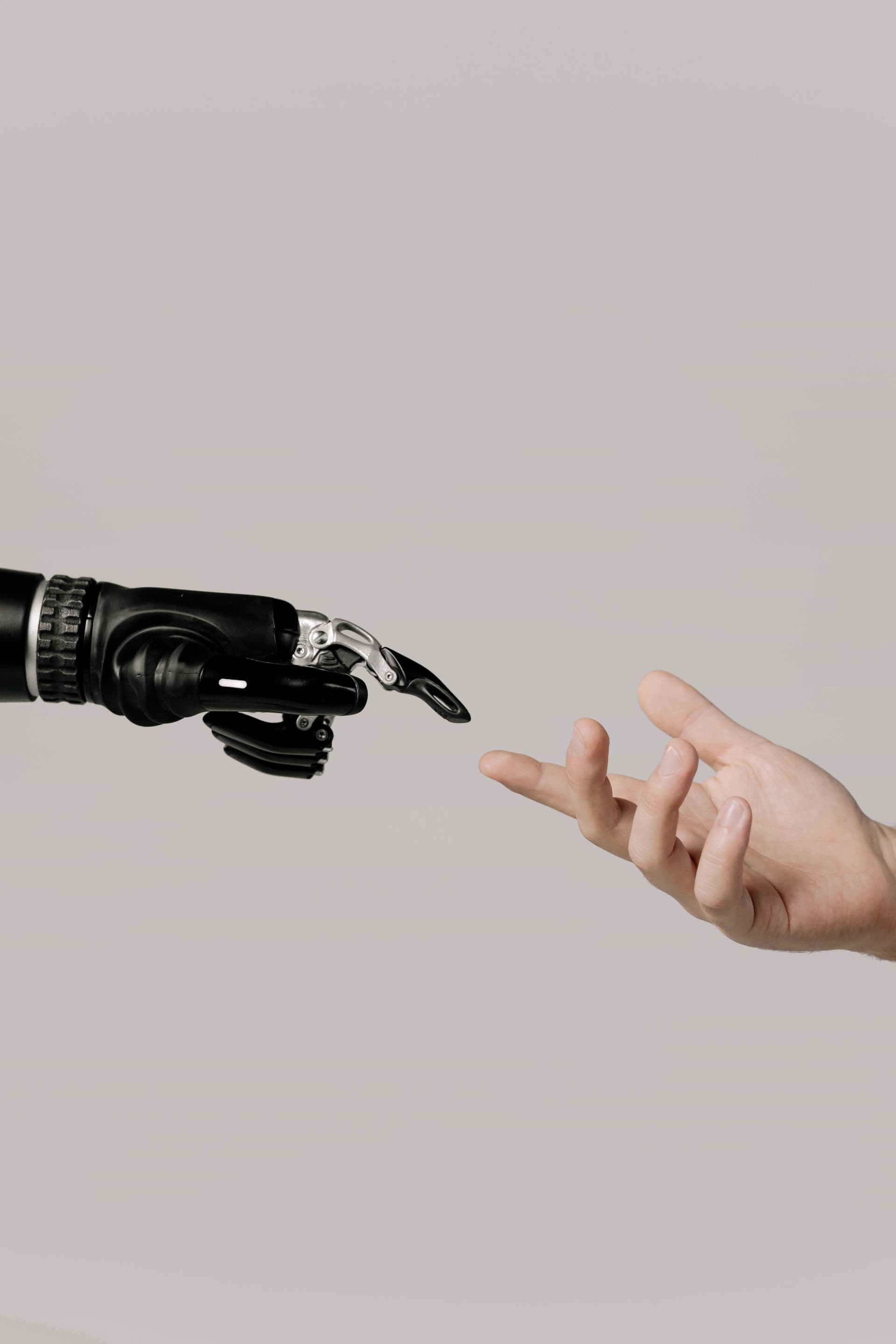
Photo by cottonbro studio on Pexels
Large industrial companies already run R&D together, but mostly one project at a time. Each collaboration is set up from scratch, and what is learned rarely travels beyond it.
Wärtsilä and Valmet are setting a different example. As founding partners of RAIDE, the Radical AI Deployment Ecosystem facilitated by Demola Global, the two companies are complementing their own R&D with joint investments in bolder openings – work that neither would have scoped on its own.
Why would a marine and energy company and a process technology company decide to innovate together? And what does Finland gain when they do? Part of the answer is the AI transition. It demands more R&D investment than before, and its most radical use cases rarely fit inside a single company’s roadmap.
The Table We’ve Built for Ourselves
In an earlier RAIDE story, Kempower explained how a lead company’s Veturi ecosystem and RAIDE fit together, and why a company joins RAIDE in the first place. The answer was simple: the other companies and the people they bring to the table – Wärtsilä, Danfoss, Valmet, Bittium and the wellbeing services counties of Pirkanmaa and Ostrobothnia.
RAIDE was launched in May 2026 by Demola Global together with Business Finland, which co-funds its early operations. Its stated ambition is to support Finland becoming one of the global leaders in applied AI by 2030. RAIDE is a cross-industry R&D platform for the AI transition, where lead companies, universities, research institutes and startups develop together. It is built for exactly the bolder bets the AI transition calls for.
This article is about the next step: moving from one-off joint projects to a systematic platform. Companies like Wärtsilä and Valmet already run co-innovation projects together. What RAIDE adds is a shared platform where that work becomes continuous and bolder. To our knowledge, it is the first platform in Finland built across several Veturi ecosystems, and such platforms are rare internationally too.
Nobody renews alone
For Valmet, the reason to join starts with the moment the company is in.
"We are no longer just facing a transformation, we are in the middle of the AI revolution. No company – not Valmet, not anyone – can keep its ability to renew on its own in the middle of that. We need partnerships and a more open model of collaboration than before. RAIDE is a natural way for us to broaden and deepen that collaboration," says Virpi Puhakka, Ecosystem Leader at Valmet.
Valmet and Wärtsilä both already lead their own Business Finland Veturi ecosystems. RAIDE does not compete with those programmes. It sits across them.
"AI is a theme that recurs in a lot of Veturi roadmaps," Puhakka says. "RAIDE brings those same themes together – not only from the companies' point of view, but from research institutes, universities and universities of applied sciences too. That way we can work across organisational boundaries more openly and understand the opportunities and challenges others see. Instead of building competing solutions side by side, we do things together, because we see the synergy in that."
For Wärtsilä, the value lies in comparing how each company takes on AI. Lead companies that do not compete directly can open up to one another in a way competitors never could.
"We get to look at each other's work and say: you have this, we have that – oh, you have it too. It is understanding, sparring and peer support. Where we have things in common, we can support each other. Where we differ, it helps us see why. And there are surprisingly many similarities. One plus one becomes more than two," says Kenneth Widell of Wärtsilä.
Sometimes the most useful thing one partner can share is a warning.
"It is hard to go and advise others," Widell says. "But we can say: we ran these experiments, this is where they went, and these were the reasons. Your environment and variables may be different, so I'm not saying it won't work for you – but at least watch out for this."
What changes inside the company
The effects of RAIDE do not stop at the consortium table. Both companies expect it to change how know-how moves inside their own organisations.
"RAIDE gives us interaction and a channel from outside the company. It is always good to refresh your own thinking. It confirms needs we already have and sparks new ideas," Puhakka says. "Because it is systematic, it also makes our own work inside the company easier. A network that brings integrated ways of working and new prompts helps us work on this subject internally as well."
Valmet has five business areas, and alongside its external partner network it is building an internal ecosystem of its own. What RAIDE adds there is understanding of the subject itself.
"We need to make sure information flows and learning happens inside Valmet too," Puhakka says. "RAIDE strengthens our understanding of this area, and we hope to share that across business-area boundaries."
At Wärtsilä, Widell points to the company's leading experts. When a specialist who is among the best in the country meets a counterpart from another industry who is equally strong in theirs, the similarities they find carry weight. So do the differences.
"Sometimes it helps to know why something does not suit us," Widell says. "Management may well ask: why don't you do it the way the other company does? When our experts can explain that in one case we do it exactly the same way, and in another we don't, and why, management can see the question has been studied properly."
For Mika Karaila, Research Director at Valmet Automation, RAIDE opens room to explore new directions alongside Valmet's existing development work.
"Right now we don't have the people to do this kind of outside work. We have our main development direction and our roadmaps, and we stick to them very tightly," Karaila says. "RAIDE lets us look at other things in parallel. If we find a better language model, a different architecture or something else along the way, we get completely new innovations and ideas worth bringing into our roadmap."
He wants RAIDE to take on cases that sit outside Valmet's own research directions. One is AI that does not chat but proposes a solution to a concrete problem, such as choosing a route, along with an estimate of how likely that solution is to be right. Another is whether one language model can be used to train or improve another. Shared computing capacity, for example from CSC – IT Center for Science, the Finnish national centre that runs the LUMI supercomputer – could make such experiments possible. These are exactly the kind of radical new use cases the AI transition is opening up – explored alongside the current roadmap, not instead of it.
Two industries, shared AI questions
Wärtsilä builds engines, power plants and lifecycle services for the marine and energy markets. Valmet supplies process technologies, automation and services to the pulp, paper and energy industries. Their customers, products and markets are different. Many of their AI questions are not. The AI transition raises the stakes for both. By pooling effort, they can place bolder bets that complement their own development paths.
Both run large fleets of complex, long-lived industrial equipment. Both need to keep that equipment running, diagnose faults before they become outages, and put expert knowledge in the hands of field and service staff. And both are looking for answers to the same kinds of questions about how AI can create value across their products, services and business as a whole.
Widell is realistic about how joint AI work begins.
"As with any joint effort, it is a bit tentative at first, until you find a couple of shared projects that succeed – or, if the project results don't, where you have at least managed to avoid some of the rocks," he says. "You notice that the other company has already hit that rock."
When two companies from different industries arrive at the same conclusion independently, that tells them something.
"If there is some uncertainty about which way to go, and two or more organisations are leaning in the same direction, that strengthens the case for going," Widell says. "Sometimes it is good to make a decision, go and experiment, and if it turns out not to be good, then put on the brakes."
Puhakka sees the same logic from Valmet's side: understand the opportunities and challenges others see, and stop building parallel solutions to the same AI problem.
The two companies are not strangers. Valmet and Wärtsilä have already worked together on joint co-innovation projects. With RAIDE, they want to take that work into the AI era and make it systematic.
"I got good comments from the others, went back, fixed things and pushed them again," Karaila says. "I think that always benefits everyone. Solutions like these, interoperability for example, are shared across industry."
The arrangement is unusual, and the companies know it.
"It is relatively rare for large companies in other countries to work together like this, even when they are not competitors," Widell says.
What this means for Finland
RAIDE platform is co-funded by Business Finland. Both companies had a direct message.
For Widell, the case is about speed and resources.
"When we do things together, we move faster because we learn from each other," he says. "That means getting to market sooner, with a better product or service. And that hopefully gives us an edge over other countries in our own fields."
Puhakka sees RAIDE as a model for a new kind of public support.
"I think this is a good example of Business Finland funding collaborative development around a specific theme," she says. "Veturi funding plays a significant role, but we also need openings like this one – ones that identify what Finland's competitiveness depends on, today and in the future, and the areas where our spearheads are or need to be, and support them in other ways than through the Veturi programmes. Long-term programme funding like this is a significant support."
Karaila sees RAIDE as a way to explore opportunities that sit beyond Valmet's current development focus.
"That is exactly why it is good to have someone working outside the normal roadmap and looking for innovations," he says. "That can give rise to new companies or good implementations for industry. When you mix companies with an outside party, you can get truly radical innovations."
Taken together, the three messages point the same way: the AI transition needs more investment, not less, and the boldest openings come from companies that make those investments together.
I believe that artificial intelligence will transform not only the features of products and services and business processes, but also the very way in which product and service development is carried out. Hundreds of companies and research organizations participate in Veturi ecosystems. Consequently, these ecosystems offer a unique framework for peer learning. I am very pleased with how quickly RAIDE and its founding partners have managed to get operations up and running, says Kari Komulainen, Senior Director of Funding Services at Business Finland.
Setting the example
Kempower joined RAIDE to help build the table. Wärtsilä and Valmet show what that table is for: industry leaders from different fields, sharing what they have learned about AI, comparing what they plan to do, and building R&D projects together that neither would have scoped alone.
It starts with peer support and the occasional warning. Over time, as Widell puts it, one plus one becomes more than two. The AI transition will keep demanding bigger investments and opening radical use cases that are best explored together. That is the example the two companies want to set, and RAIDE is the cross-industry R&D platform built to make it the norm rather than the exception.
Share this event with anyone you think would be interested.
