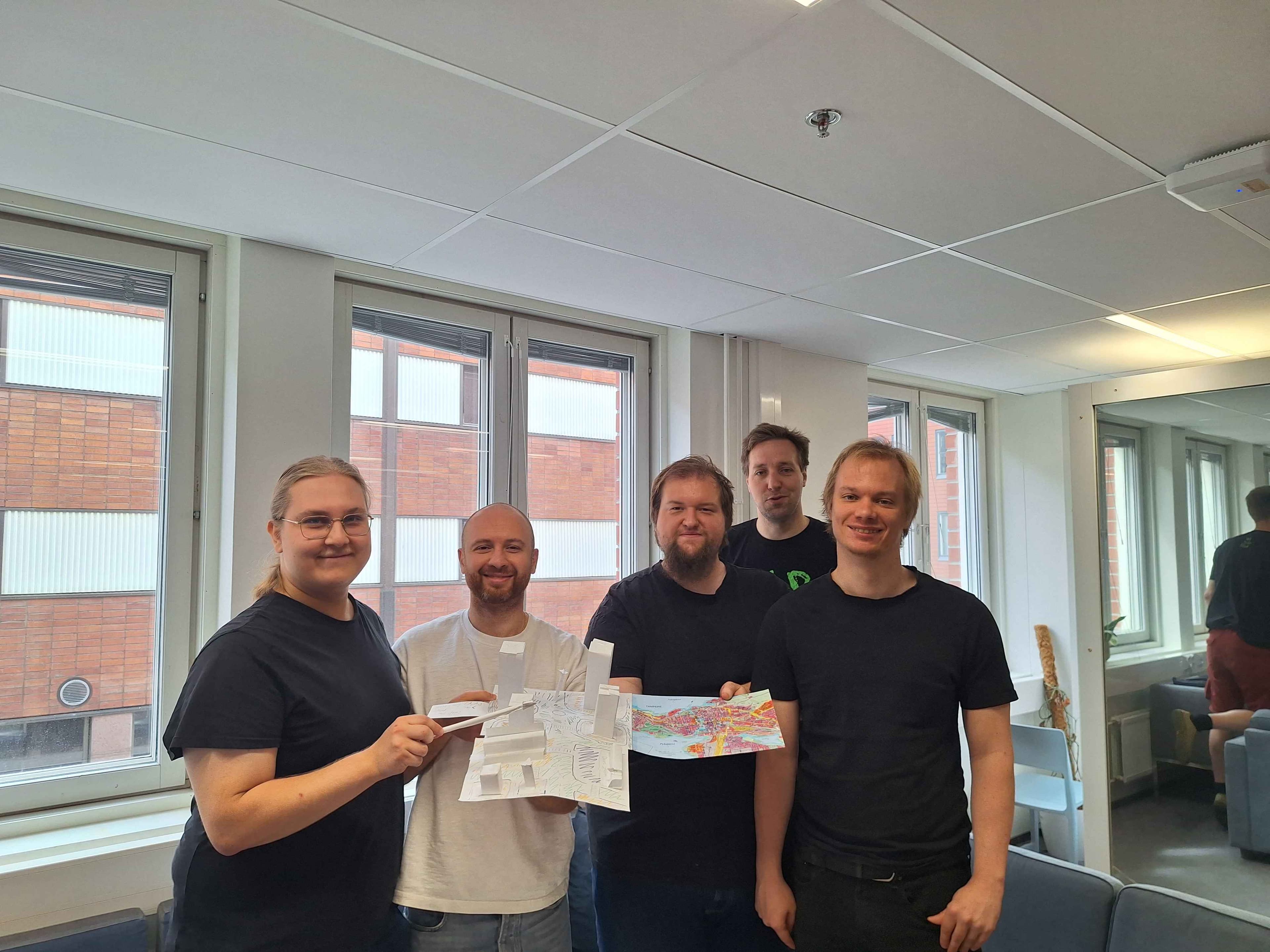
This is a story of how an open summer challenge — and a phone call answered in Iceland — turned five Tampere University of Applied Sciences students in Finland from complete beginners into a team that could pick a drone's identity out of the air.
When five students from Tampere University of Applied Sciences (TAMK) joined their Demola summer project in Tampere, the brief was deliberately open: find a way to identify drones in flight. Nine weeks later they had a working application, a real grasp of radio signals and aviation law, and a far more interesting story than the one they thought they had signed up for.
The project ran from May to July 2026 as part of the Summer Internship Programme with Demola, with the team meeting to work together through the business week. The challenge sat at the edge of an industry that barely existed a decade ago: how do you reliably recognize a drone while it is in the air? Under European rules, every drone must broadcast a Direct Remote Identification signal — known as DRI — that is open and unencrypted, so the aircraft can be recognised in flight. The team's job was to catch that signal and make sense of it.
Five beginners, one signal
None of the team members joined the project as a drone expert. "We started this as non-experts and finished as experts," is how the team sums up the nine weeks, and they really did begin from zero.
Julius Huhtasalo had the deepest software background, studying a four-year IT engineering degree at TAMK. Arttu Saarela, a business information systems graduate, began working on the code and gradually took over the database and the app. Antti Pieti had studied IT years earlier before moving into bioproduct and process engineering, and he settled naturally into the coordinator's role. Alexander Salehyan came from bioproduct and process engineering background and joined Antti in coordinating and managing the project. Jonne Välimäki, an engineer with a background in data transfer, networks and signals, became the one who chased down the hardware.
The first week was spent on individual work, each member doing background research before the group came back together. After that it got hectic. "At the start it was just figuring out the direction," the team recalls — scouting approaches and testing what was even possible, a phase where nothing was ruled out yet. There was no project lead handing down decisions and responsibility sat with everyone, which was slower at first but forced them to reason things through together.
Hello, it's me - Working the phones
The breakthroughs were not only technical, but also very human.
The team set out to validate their project by asking questions and feedback from relevant stakeholders in different fields: companies, public organisations and universities. They picked up the phone and kept dialling, chasing down the people who actually knew about drone hardware, regulation and airspace. One of the calls they made reached a drone expert from the Oulu University of Applied Sciences who answered the phone in the middle of a drone flying project in Iceland. The team needed a transmitter to test their solution and soon, one arrived from Oulu. Suddenly the team had real hardware to pull apart, study and understand. All this with one phone call and the attitude of putting yourself out in the open.
The same persistence built a network fast. Firstly, they got to talk to Irene Vekkeli, Director of Economic Development and Innovation at the City of Tampere. Then they reached Tero Kyckling, Senior Business Advisor at Business Tampere, and met with Christina Suomi, Project Director of City Aviation at the City of Helsinki who brought her colleagues to the meeting with the team. All of these encounters brough invaluable feedback, contacts and helped the team to really dive deep in the field.
A room full of reasons it couldn't be done
The toughest test was a hackathon at Nokia Arena including Traficom and Elisa, with Elisa's defence-innovation side among them. The team walked in with a clear demo of their solution and wanted to get answers from experts.
What came back was a longer list of problems. This breaks the law. This costs too much. Every promising idea ran into an obstacle, and each one had a reason behind it. It was a blunt lesson in the distance between an idea that works on a whiteboard and one that is allowed to fly over a city.
The pivot
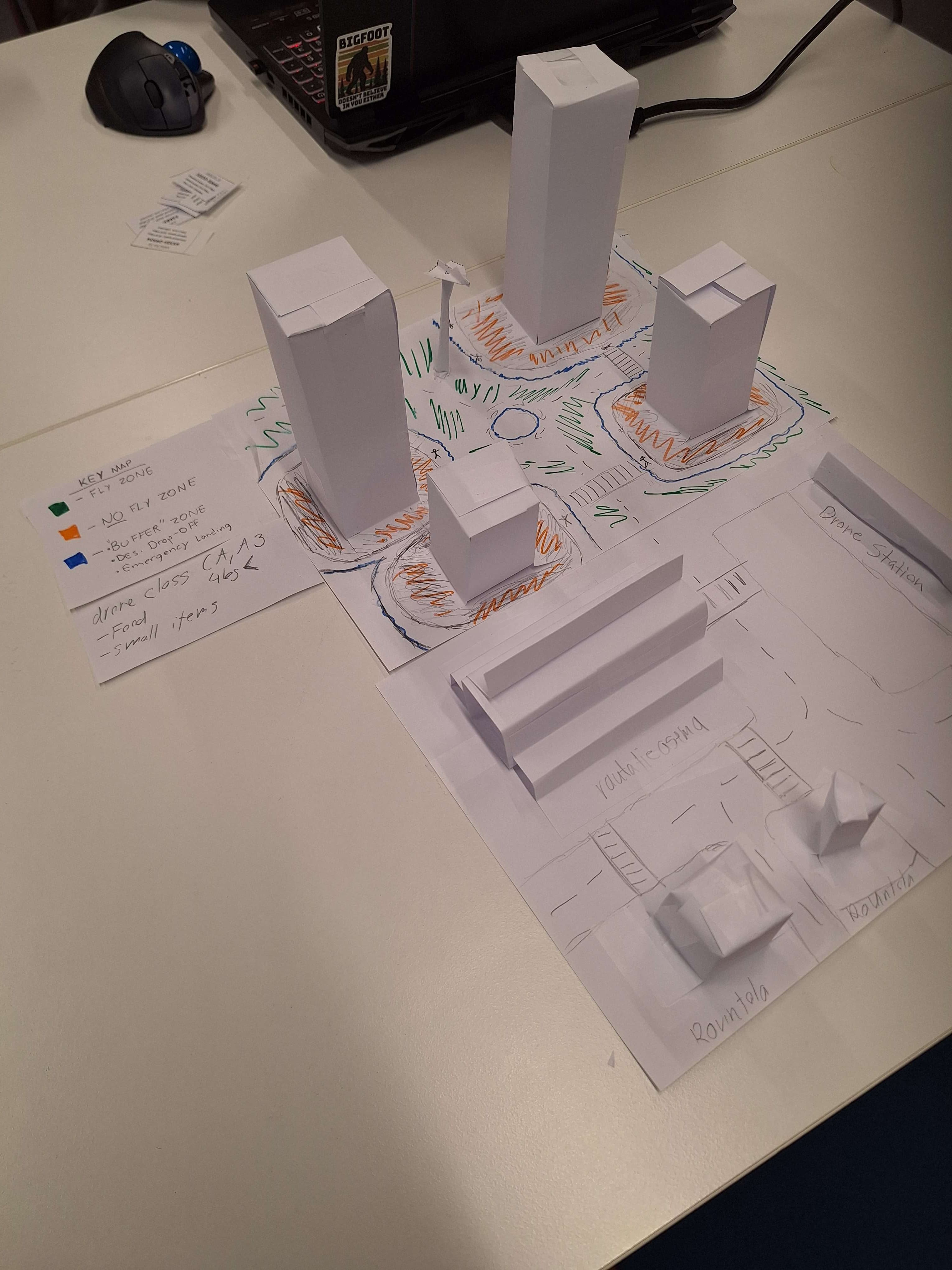
The original plan was to build a commercial case around flying drones in the city, with monitored "drone corridors," an idea that had come from the City of Tampere itself. The more the team learned, the clearer it became that current legislation simply did not allow it. The pivot became its own lesson. Several of the team members admitted that, before this, they would have kept grinding at a dead end rather than abandon it. "If the path doesn't continue, you used to just keep going," one reflected. "If you really develop understanding around the problem itself, you can change focus and come at it from a completely new angle." And so, even though there wasn’t that much time left, the team was able to finish and ship an application that recognizes drones flying in a certain area, plus a clear-eyed account of the real obstacles in the drone business, backed by proper technical documentation.
Getting unstuck, it turned out, is a skill you can practise.
Why co-creation works when the brief stays open
What makes the story worth telling isn't only the end results but rather, how the team got there.
Their sharpest line was about research and development itself. "R&D is incredibly slow," they say, "but if you do it patiently and well, you get an enormous amount out of it. Do it alone, and you just produce a long document with no idea whether any of it makes sense." The team spent the time outside their comfort zone, tackling problems as a group rather than alone, and learning across each other's fields.
A team of strangers took on an open brief about drones and ended up becoming a team of talents who understand the field, having built something real from nothing. It’s no wonder the team has already had discussions with the stakeholders they interacted with about future opportunities as well.
That's what co-creation produces when the topic stays open: not just a deliverable and deep understanding but a team of talents that grow up alongside it.
Share this event with anyone you think would be interested.
